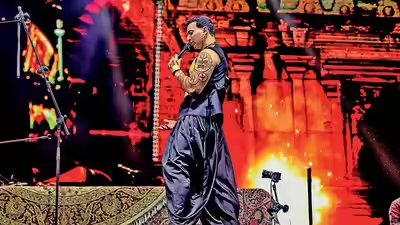
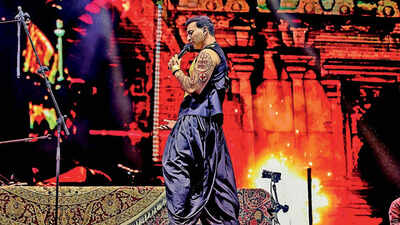
He was on stage a few minutes before the scheduled start of 7:30pm, opening the concert with an immersive silence, followed by a meditative breathing exercise, far removed from the loud cheers and overstimulated energy typical of concerts. With fans mostly dressed in white, as requested by sitarist Rishab Rikhiram Sharma, the optics, visuals, production and even the entry experience felt unlike anything the city had seen before. In an open ground in the city, fans sat through the entire performance. There was no dancing, just Rishab playing the sitar and calming the audience with his music. From playing Shiv Kailash to surprising the audience with the viral Bahraini beat – FA9LA from Dhurandhar – Rishab performed for an audience that went back with their hearts full as he concluded his ‘Sitar for Mental Health’ tour in his city.FILMI NOTES IN A MEDITATIVE SET● Zara Zara● Tumhi Dekho Naa● Kal Ho Naa Ho● FA9LA


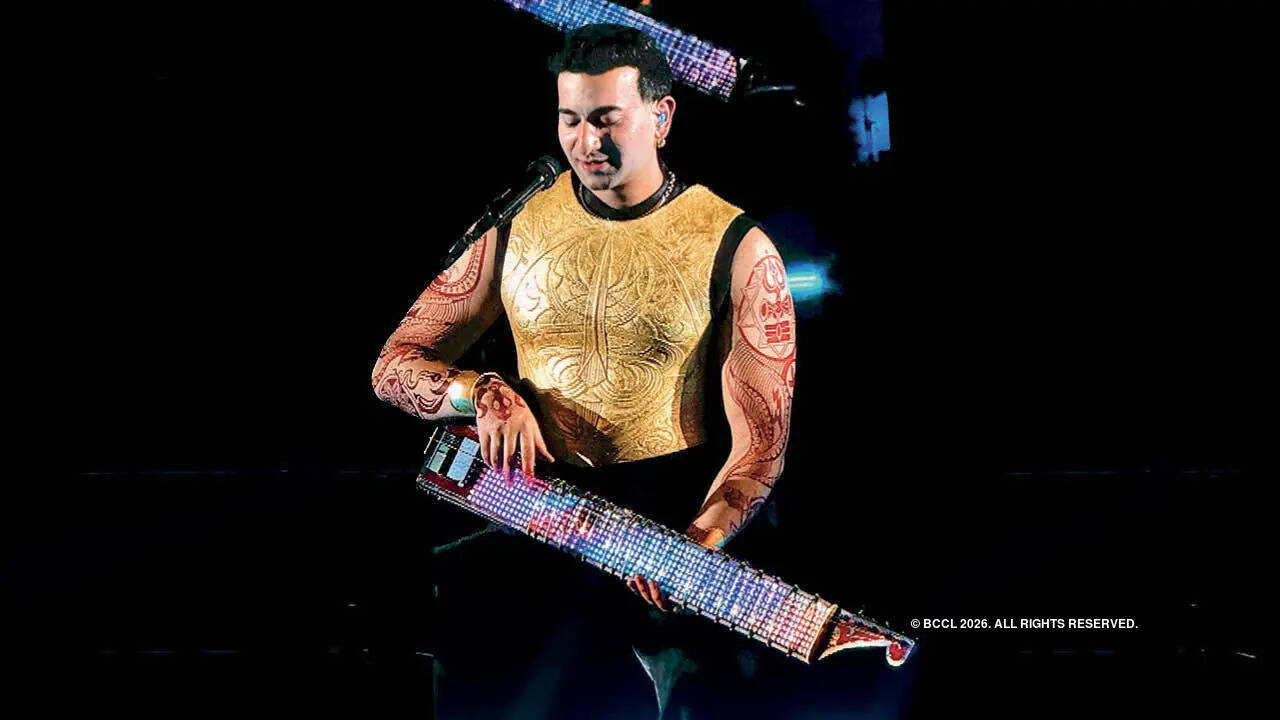
“Shoutout to my dad for making this wonderful sitar, it is called SITARA,” said Rishab
RISHAB TAKES DELHI ON A SONIC JOURNEY ACROSS RAGAS AND NOSTALGIAWith an armour as part of his attire, mehendi on his arms and not just the classical instrument sitar but also an electric one, Rishab’s performance unfolded an expansive exploration of ragas including Bihaag, Kedar, Tilak Kamod . As soon as the song changed, the visual backdrop changed from ghats of Banaras to the mountains of India. One depiction also featured the Hogwarts dining hall. The transitions matched the ragas , speeding up or slowing down in sync with Rishab’s sitar.“This is a journey from the deserts of India to the mountains of India,” he said before he played Padharo Mhare Des on sitar followed by Shiv Kailash . Asking the crowd if they had come with family or solo, Rishab described the evening as “a fun family bonding exercise as well” for those who had come together.Before he performed Raag Tilak Kamod , he spoke about it in a manner that indicated that he is unfazed by the controversy around him being a disciple of Ravi Shankar. “This is the first raag I ever learnt, first from my dad, and then my guruji , Ravi Shankar ji , and this song captures my first lesson that I had, and this sort of summarises how beautiful it was,” he said, reiterating the description of the maestro as his guru .After halftime, Rishab asked the audience if he could go back and perform for the audience in the back. He then walked to the second stage amidst cheering fans. “This song that I am now going to sing is a Himachali folk song called Belua, my mother taught me this song,” he told them, acknowleding his mother’s presence.“This is my city, kya sunna chahenge Delhi ki audience,” the sitarist asked the audience from that stage before he played throwbacks like Zara Zara, Tumhi Dekho Naa, Kal Ho Naa Ho.As he switched to a flashy, lit electric sitar, he spoke about it: “Shoutout to my dad for making this wonderful sitar, it is called SITARA, it has 640 LEDs on it.” The sitar was a visual highlight of his subsequent acts.Returning to the main stage, he played FA9LA by Flipperachi, the song from Dhurandhar that went viral thanks to Akshaye Khanna’s moves.
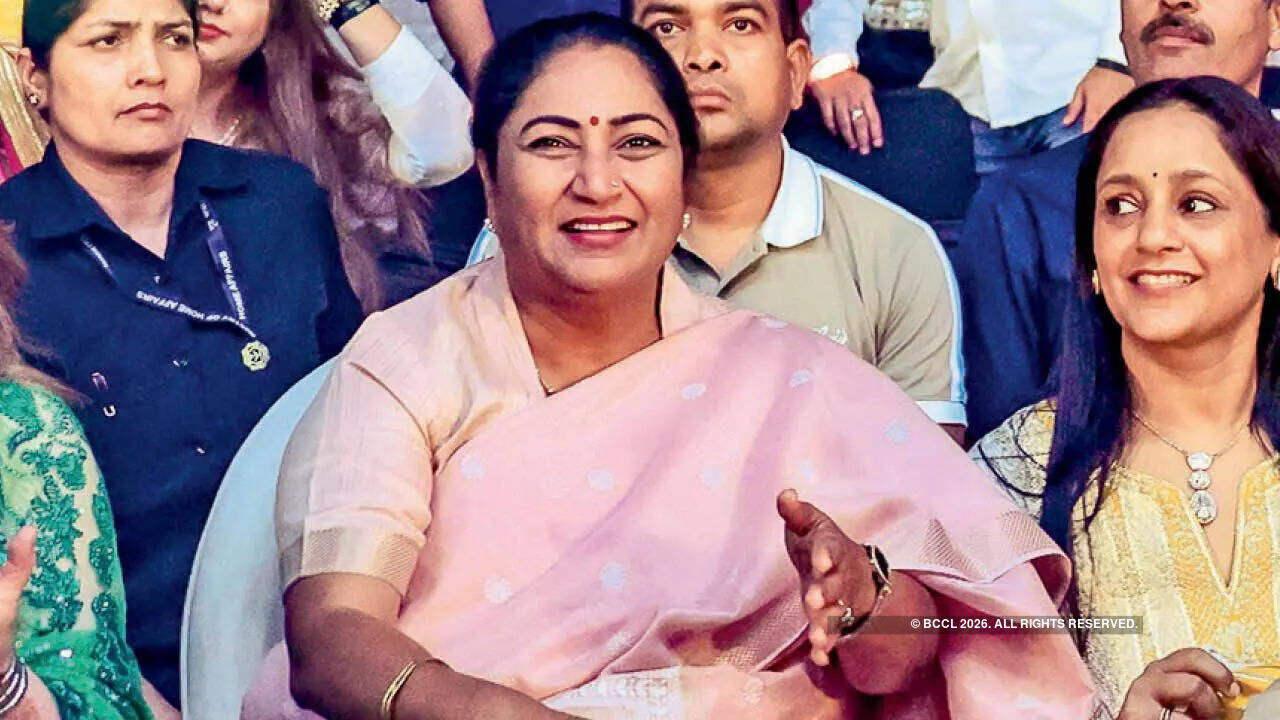
Delhi CM Rekha Gupta
‘I have got my armour today’As the performance reached its final bit, Rishab played The Burning Ghat , his tribute to the Manikarnika Ghat in Varanasi, and recounted how affected he was when he visited the ghat . Next up, he dedicated a song to mothers and shared, “I have got my armour today and I feel our mothers are that to us. I think mothers are the most courageous people.” He concluded the performance and his tour with a powerful Tandavam. Among the prominent faces seen at the event were Delhi CM Rekha Gupta, Riddhima Kapoor Sahni, designer Nikhil Mehra, and MPs Priyanka Chaturvedi and Rajeev Shukla.
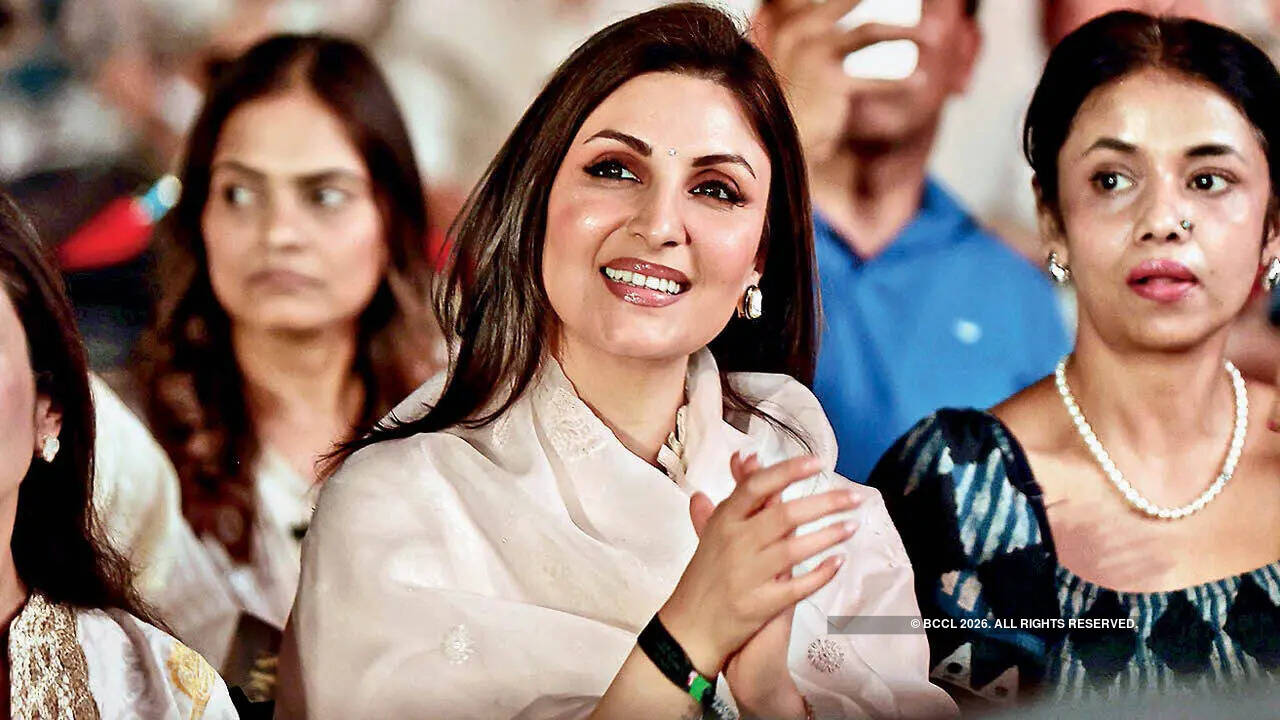
Riddhima Kapoor Sahni
Rishab consciously avoided fireworks for the grand finale, “an intentional decision taken to ensure a mindful and responsible celebration,” his team stated.QUICK TAKE Rishab and the reimagining of ragasHe plays the sitar . He plays ragas . But just when the music veers into the space of feeling distant, when the thousands gathered in an outdoor venue on an April evening may drift off momentarily, Rishab Rikhiram Sharma slips in something unexpectedly familiar – Harry Potter, Game of Thrones, Fa9la and even Tumhi Dekho Naa.And suddenly, the room shifts. As the notes climb and the performance deepens, Gen Z, first-time listeners, and those new to the sitar , all find something to hold on to. The raga may be complex, but the melody stays.So the next time someone asks, “Do you follow classical music?,” they may not necessarily name a raga , but they remember a feeling – of hearing Harry Potter on a sitar.In the 1984 biographical drama Amadeus , court composer Antonio Salieri plays his refined, intricate compositions for a priest and asks, “Do you remember this?” The answer is no, “I regret it is not too familiar,” says the priest.Then he plays one by Wolfgang Amadeus Mozart and the priest immediately responds, “Yes, I know that,” even humming along : pom pom, pom, pom, pom, param, pom.That is sometimes the difference in reach. Not complexity, but recall and familiarity.In Amadeus , that recall is also rebellion. Mozart is pushing against a rigid, court-controlled musical world – one shaped by hierarchy, convention, and gatekeepers – and in that rebellion creating something that feels far more alive, dramatic, and immediate.Before him, opera – especially Italian opera – was often intended for aristocrats, filled with stories of gods and kings. But in The Marriage of Figaro , an opera by Mozart, the focus shifts to servants outsmarting their masters – and suddenly, the story feels closer, more human.Rishab’s approach feels like a modern echo of that instinct. Not by changing the structure of classical music, but by changing who it opens itself up to – and how we enter it.“Familiarity is often the doorway. When audiences recognise something they already love, they open up instantly. I may bring them in with a Harry Potter or Game of Thrones theme, but once they’re there, they’re also experiencing Indian classical music. It’s less about fusion and more about translation – creating an entry point,” he had said in an earlier interview.When Rishab plays Shiv Kailash , or Chanakya’s ‘ Dheem Ta Dheem Ta ’ hook – something that has now become signature to him – there’s a similar shift.“People often stop me and mention it with a smile,” he had told us – about a sound deeply rooted in classical tradition, yet presented in a way that lingers.From live streams to packed open grounds and global tours, his sitar is finding new listeners – and new memories. Not by overstimulating them or making them dance for hours on blasting music, but quietly, through tunes they know, and by carefully adding ragas they wouldn’t know. By creating a vibe more conventionally associated with a rock concert than with a classical sitar recital.Is this akin to what Mozart did to the court-controlled music? Or is it closer to what T20 did to Test Cricket? Either way, if it brings more listeners and creates greater recall, it is the fusion that, like bhajan clubbing, is bridging gaps, generational and more.