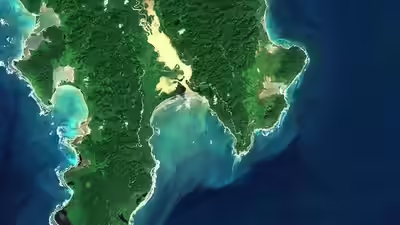
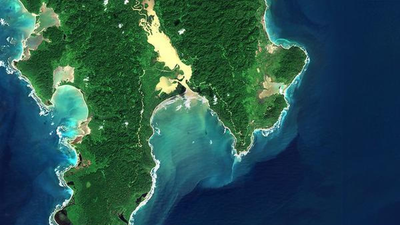
NEW DELHI: In a reaction to Congress LOP in Lok Sabha Rahul Gandhi’s opposition to the Greater Nicobar project , former IAF chief Air Chief Marshal R K S Bhadauria (retd) has said that the project is “important for India’s military footprint” in the area.Several defence veterans who have also voiced their support in favour of the island project.ACM Bhadauria (retd) has dismissed Congress’s criticism as misplaced and highlighted that the project is critically important for India’s national security, economic growth and military foothold. He emphasised its strategic location for monitoring the Malacca Strait, another chokepoint after Hormuz, in order to keep a check on China. Roughly, 80% of China’s oil imports and a significant portion of its overall cargo pass through this narrow waterway (Malacca Strait).With China’s increasing naval presence in the Indian Ocean Region, India needs to have a strong economic and military base in the Great Nicobar island.The Rs 92,000-crore Great Nicobar mega-infrastructure project comprises key infrastructure development such as a transshipment terminal, greenfield international airport, township, and power facilities, with limited forest diversion, compensatory afforestation, and no proposed displacement of indigenous communities.Bhadauria’s remarks came a day after Rahul Gandhi alleged that the Great Nicobar project at Campbell Bay was “one of the biggest scams and gravest crimes against the natural and tribal heritage of the country”.A bench of the National Green Tribunal on Feb 16 this year had cleared the way for the Great Nicobar project, noting that “considering the strategic importance” of it and “other relevant considerations”, “we do not find any good ground to interfere”. It had disposed of applications related to the environment clearance (EC) for the project, with a direction to authorities “to ensure full and strict compliance of EC conditions”.Reacting to the opposition to the project, ACM Bhadauria (retd) said, “It is crucial to understand this from a strategic perspective, specially in light of recent events, such as the ongoing conflict (in West Asia) and developments in the Strait of Hormuz.Strategically, it is crucial to understand that this project will provide us with the capability to position ourselves just 150 km away from the Strait of Malacca. Our overall domain awareness, both in the air and maritime spheres, will receive a significant boost.”Giving an example of the Gulf crisis, Major General (Retd.) G S Rawat recently said, “We need to look at this (project) from an operational and strategic perspective, including its geographic alignment and maritime positioning. Recent global developments have shown how tactical choke points can be exploited, as seen around the Strait of Hormuz.Similarly, the Strait of Malacca holds even greater significance in terms of global trade and maritime movement… From an operational standpoint, controlling or having a strong presence near such routes enhances strategic leverage, surveillance capability and maritime security. This is where the importance of the Great Nicobar Project lies, as it strengthens India’s position in monitoring and responding to developments across these critical sea lanes.”Air Vice Marshal P K Srivastava (Retd) said, “Whenever the govt of India undertakes a project, it consults a wide range of expert advisors from different fields. Every project is prepared after taking opinions from specialists and conducting proper on-ground surveys of the area.Such projects are not designed sitting in Delhi alone—teams visit the site and assess all aspects.Any potential concerns or issues related to the Great Nicobar Island project would have already been carefully considered during the planning process.”Calling the project a major strategic and economic win for the country, Maj Gen Sinha (Retd) said, “In the maritime domain, the Great Nicobar project has created a stir in the country. Some people do not want the country to emerge in the world.”Cautioning about China’s moves, Lt Gen (Retd.) Rajeev Chaudhry, former DG of the Border Roads Organisation said, “If opposition leads to delays in the project—especially through international pressure citing environmental concerns—it can benefit China. Beijing is wary of such a project at Great Nicobar Island because it would enhance India’s surveillance over maritime trade and military movements in the region...China’s ‘String of Pearls’ strategy—through ports like Gwadar Port, Hambantota Port and Kyaukpyu Port—would be countered by a strong strategic and economic hub at Campbell Bay and Galathea Bay… Such opposition or negative narratives can inadvertently align with Chinese interests. This is an essential project that ideally should have been implemented much earlier.”